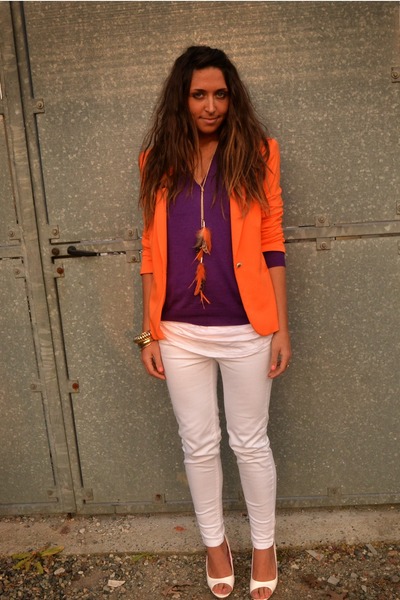
Wednesday, May 22, 2013

Fashion Archetypes and A Congruent Image

Powerful men and women have a uniform. They don't wear something new from day to day. Nor do they usually mix and match styles from different archetypes (unless they're in the industry). There is a very good reason for this.

A 2003 study illustrates the importance of a congruent image. That went something like this (sorry I lost the link):

A man would ask strangers for help reading a manual. In one instance he had tattoos showing and was dressed down. In another instance, he wore a suit with no tattoos showing. In the third, he wore a suit but the tattoos were visible.

When the man wore casual clothes, showing tattoos and the suit without showing his tattoos, people spent an average of 54 seconds helping him. But when the man wore the suit and allowed his tattoos to be visible (rolled up sleeves), he only received about 32 seconds of help.

The details may be off, but the point is that as humans we prefer a coherent image and become too confused with a contradicting image. We're more likely to spend time helping someone with a coherent image (whether tatted or suited), but less likely to help someone dressed in a way that pieces different images together.

This is the reason I hate wearing a button down and blazer with jeans. I never recommend that men do this because the image is incoherent and confuses people too much. This decreases the power you have in social interactions. In addition, the flamboyant nature of mixing and matching may lead women to ask if you are gay (from my own personal experiments and observing others). Nothing wrong with that unless you want to exude a masculine energy, which has its own reasons and benefits.

The only exception I might make is if each piece of clothing worn comes from a different style. This actually creates a coherent image and the eclectic archetype. The major style archetypes follow (can you guess mine?):

1. Classic -

Men dressing classic usually wear suits, simple and neutral colors, black tie attire, watches, cufflinks. For a more casual look they may wear khakis, polos, and sweaters. Short haired and well-groomed.

Women displaying the classic type usually wear dresses, skirts, pearls, necklaces and earrings, blouses. They'll tend to have longer hair (but may go short) and be well groomed. Related to trendy category since new trends may eventually become classics. [Side note: long hair always looks better on a woman. It's more feminine and frames better. No man wants to make-out with a woman that looks like a 12 year old boy.]

Think professional, elegant, classy, conservative. Examples of classic men include Daniel Craig, George Clooney, and Leonardo DiCaprio. Classic women include Nicole Kidman and Audrey Hepburn.


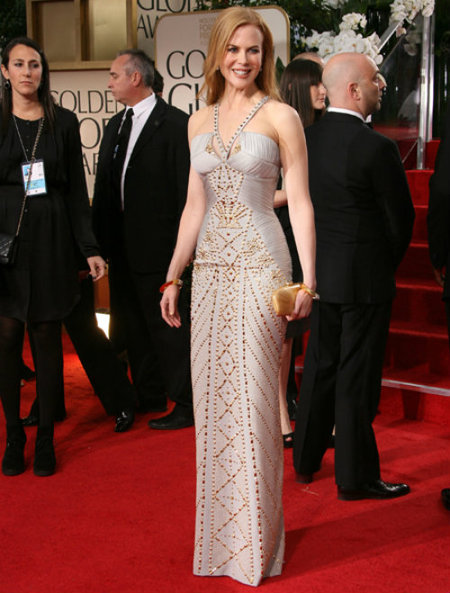
2. Trendy -

Trendy dressers tend to follow whatever is in style rather than really figure out what reflects their real personality. This can be problematic if your look changes constantly as it reflects a lack of a sense of self.

Trendies also include subculture styles such as hip hop, hipster, scene, etc. Tighter cuts fall here. GQ is all trends. Shorter hair on women is also a current, albeit unattractive, trend. Sexier version of the classic archetype.

Examples of good trendy include Joseph-Gordon Levitt, Ryan Gosling, and Ed Westwick. Not a huge fan of Timberlake who is a little too GQ, which I used to be as well. Emma Watson is trendy.


3. Dramatic -

Dramatic dressers wear leather jackets, denim jackets, jewelry, jeans and have wild hairstyles. Tattoos and piercings are common. Grooming tends to on the lower end. Dramatic women wear attention grabbing make-up. Shiny things and avant-garde fashions fall here. Related to romantic and eclectic styles as they're all a bit on the flamboyant side.

Think rockers, punks, rebels, bad boy/girl, eye-catching, seductive. Keith Richards and David Bowie for male examples. Lady Gaga is very dramatic.


4. Romantic -

Romantics wear loose and soft clothing with lots of jewelry. Hair tends to be longer on both men and women.

Think boho, hippie, relaxed. Great male examples are Johnny Depp and Robert Downey Jr. Romantic woman is synonymous with Nicole Richie.


5. Eclectic -

Eclectics usually incorporate lots of different elements from all different kinds of styles but still create a coherent image. This is generally an advanced style and closely related to the dramatic archetype.

Think fusion, mixed, eye-catching, cultural. Gwen Stefani is an eclectic dresser. Rare among straight men.


6. Natural -

People dressed naturally will usually wear jeans, tees, Northface jackets, and other casual clothing. The grooming is moderate and accessories are minimal. Related to sporty category. Tends to not care about clothing as much.

Think guy/girl next door. Look at people you wouldn't usually notice for an example.


7. Sporty -

Sporties wear athletic clothing, sneakers,tank tops, and minimal accessories.

Think athletic, outdoorsy, physical. For examples look in the gym and sports field.

Find your fashion archetype (based on your personality and lifestyle) and stick to it. This is the best way to make your clothing work for you. Note, however, that most personal styles combine two or three archetypes yet manage to maintain a coherent image. This is an advanced topic I will cover in the future.

Friday, May 17, 2013

How to Rewire Your Brain For Positivity: Gratitude


One of my favorite tips ever, for rewiring the brain, is keeping a gratitude log. I remember months ago my head was filled with lots of negative thoughts. Then, I watched a TED talk about positive thinking and it did wonders.

I'm not going to link any research as to the benefits of gratitude because there is loads of literature and it is easy to find. But above is that TED talk. Please watch it, it's very powerful not to mention really funny!

Quick action steps:
1. Write down three new things you are grateful for each day for at least 21 days

Thursday, May 16, 2013

Charismatic BusinessBalls


Here's a great resource, written by Nikki Owens, on charisma. According to Owens, charismatic people have the 5 following traits:

1. High Self-Esteem and comfortable in their own skin. This allows individuals to be authentic. It is contextual. Elvis Presley was charistmatic on stage, but shy in front of reporters.
2. Driving Force whereby individuals live their life according to their values, which creates dynamism and enthusiasm. This is also contextual. Margaret Thacther had a strong drive as a politician  but was more relaxed in the home.
3. Sensory Awareness which allows charismatics to tap into their own feelings and those of others. This makes them very expressive.
4. Vision of what they want, which creates a strong energy of intent.
5. High Energy which intoxicates others and builds energy within them.

Remember my previous post on charisma? This builds upon that one and delves into more of the internal component. The one change I would make to Owen's summary is replacing "high self-esteem" with "high confidence" because I don't consider self-esteem to be as contextual as confidence.

A key take-away from the article is that charisma is a combination of external charming gestures and internal character qualities. This, seemingly then, contradicts Cabane's assertion that charisma is a learned behavior.

Well, most of these internal qualities can be learned as well (except maybe high energy). However, some personality types may naturally be more suited to learning charisma or developing higher levels of charisma.

The importance here is that of cultivating an internal ecosystem of charisma traits, which will then manifest itself in external behaviors. Remember, method-acting is more powerful than simply learning external behaviors and body language.

We can use our conscious minds to program our unconscious, which will then communicate non-verbally with the world.

I'll soon write up my own definition of charisma, so look forward to that!

Quick actions steps:
1. To increase your self-esteem, sit down and list 30 things that are great about you. 30 may sound like a stretch, but that is the point. My first list contained 50 items.
2. To increase sensory awareness (i.e. presence), spend 20 minutes a day doing yoga or meditation.

Wednesday, May 8, 2013

The Future of Business and Free Content


Social media, freemium, and The Thank You Economy by Gary Veynerchuk illustrate the evolving tide in business.

Not long ago, businesses offered a product or service and consumers purchased it outright. Now, consumers expect companies to offer free value whether in the form of blog content, free ebooks, etc. Those that fail in this endeavor fail to generate customers. 

I've experienced this myself when I purchased a $300 program from a company because of the amazing free videos they posted regularly as a "thank you" for what they do. Of course if the free content was valuable, the paid content would be valuable as well.

Selling is being focused more and more on Cialdini's principle of reciprocity. Do something nice for me and I want to do something nice for you. This is why grocery stores that offer free samples get customers to buy more. 

As a result, companies can no longer survive without offering significant quality and value. They really do have to offer a good product or service to even register on consumers' radars.

This is a double edged sword however. My entitlement has now gone up. I expect free value everywhere I turn and am less willing to spend money as I believe value should just be handed to me or that I can find what I need for free somewhere else. 

Businesses will now have to work hard on producing consistently high value content and develop new business models for generating revenue. Marketing is getting harder. Upselling to paid products will be key, subscription models will be more common, and consumers will have more say over what companies make and sell.

We're in for a challenging, yet exciting future.

Quick Action Steps For Anyone Try To Sell Something:
1. Create a free resource such as an e-book to genuinely improve peoples' lives

Tuesday, May 7, 2013

Get Bloody, Dirty, and Sweaty


"It is not the critic who counts. Not the man who points out how the strong man stumbles or where the doer of deeds could have done better. The credit belongs to the man who is actually in the arena, whose face is marred by dust and sweat and blood; who strives valiantly; who errs and comes up short again and again; who knows the great enthusiasms, the great devotions; who spends himself in a worthy cause. Who, at best, knows in the end the triumph of high achievement, and who at the worst at least fails while daring greatly, so that his place shall never be with those timid souls who know neither victory nor defeat."

-Theodore Roosevelt

Friday, May 3, 2013

Self-Improvement Is Not Really About Improvement


Alan Watts demonstrates an important point in this video. We already are the brahma.

The conventional perspective to self-improvement is that of becoming great. This is somewhat false. Realize that you already possess greatness. All you must do is remove the mental obstacles that limit your greatness. These include false beliefs, social conditioning, self-doubt, and many other limitations adopted since early childhood.

Imagine your greatness as an infinite ocean spanning across all of space and time. At the center, there is a large well (or access point). However, this well is buried under heaps of bullshit. Dead earth and slimy fungus plug up the opening.

You can plant gorgeous flowers and huge red woods on top of the rubbish, but they will not live long. Instead, clear away the dead earth and fungus and allow the well to gush forth with liquid greatness and nourish the flowers and trees to grow as wide and as tall as the eye can see.

Here are two quick action steps to get started:
-Read The Voice of Knowledge
-Take 1 negative belief or thought and disprove it. For example, if you think "I'm stupid," sit down with a piece of paper and write "I'm smart" at the top. Next, write down at least ten instances where you did something smart.

The Purpose of Clothing

***
Decided to move fashion content back. 2 separate blogs consumes too much time. Please excuse the ADD perfectionism.
***

The purpose of a man's clothing is simple: draw attention to the man, not the clothes. Menswear must highlight the man, which is defined in our culture as his face and his eyes. A man's clothing choices should funnel a viewer's attention to his face and, if possible, his eyes (i.e. his character).

Highlighting a man's face is done mostly through color, fit, hairstyle, and grooming. Poor fits or terrible colors will distract a viewer's eye away from the face and to the clothing itself. Avoid this at all costs as you will fail to wear the clothes, the clothes will wear you. Specifically, hairstyle and the color worn around the face have the biggest impact on where a viewer's attention will go. Healthy skin is vital as well.

The purpose of a woman's clothing is the same: draw attention to the woman. However, in our culture, the emphasis shifts slightly to highlighting a woman's overall figure rather than her face. This usually means longer hair and more color and pattern on clothing. Fit, color, hairstyle, and grooming are once again crucial.

Personally, I hate caked-up make-up if it's worn on a regular basis (sometimes it can be really hot), but I love when women wear eye-liner because I like looking into a woman's eyes. A woman that can hold strong eye-contact exudes confidence. My icey, cold heart begins to melt.

The fundamental principles of style for both men and women are the same. We only have varying definitions for the what we choose to highlight about a man or woman.

Spring Trends and How to Pull Them Off

Flowers bloom, sunshine begins to peak through, and people show more skin. Spring rejuvenates the soul. It also brings new fashion trends.

Fuck fashion.

Cultivate personal style instead. Fashion can't make up its mind, it's ADD. Style, however, transcends time. Style conveys assuredness while fashion betrays confidence.

That's not to say you should exclude trends from your wardrobe. Merely, ask yourself whether a certain trend fits your personality and whether you can wear it beyond a single season.

Here's a rundown of the big trends right now and some ideas on how to incorporate them. Orange, camo, and floral print are the main ones. African print and denim shirts are two additional trends I'm not going to cover at this time.

I. Orange
Large blocks of orange tend to look garish and very few people have the complexion to pull it off.

How Not to Wear Orange

Ridiculous orange suit


Orange shoes that draw attention away from the man (i.e. his face)

If you have a bad fake tan


How to Wear Orange

Just a pop of color in an accessory

Again, as a splash of color in an accessory

If you break up the large block of orange around the face to retain a bright complexion.


II. Camo
A few days ago I saw a camo blazer, camo shoes, and a camo tie. This theme can easily go wrong.

How Not to Wear Camo

Full suit camo

Camo dress shoes


How to Wear Camo

In a fitted jacket with quality color/dye

Well-draping camo pants in a subdued tone

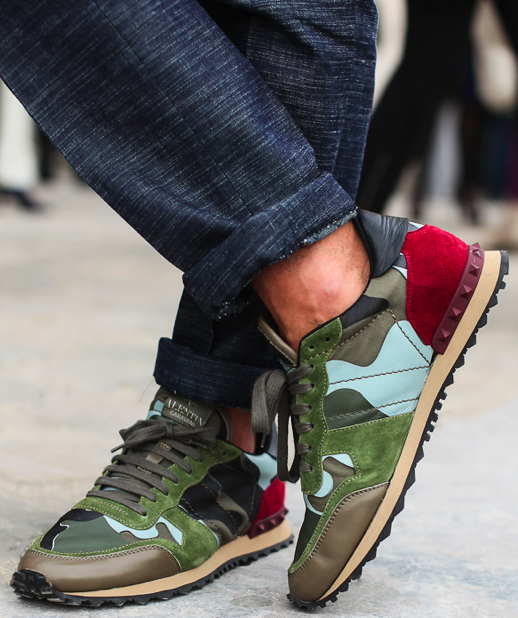
Camo sneakers


III. Floral Print
Floral print is a bit easier since the trend comes around every spring time. It doesn't really go out of fashion as it is a more traditional spring time look. Hard to go wrong if you're a woman on this one. 

How Not to Wear Floral Print

Overdoing it

Most men should avoid floral pants, though this look isn't too bad (bolder print with a plain shirt)


How to Wear Floral Print

In small amounts and on seasonal pieces like swim trunks

Floral shirts and in larger print

Red and Black Make You More Attractive


Whether you like it or not, people judge you based on appearance. Color, in particular, speaks volumes.

Clothing colors can make skin look either healthy or sickly. Colors affect both the perceiver's and the wearer's psychology. The recent lab coat test experiment also supports this idea.

I recently stumbled upon this article in an evolutionary psychology journal. It provides evidence to support the theories of color/clothing psychology. You can read it for detail, but the main takeaways are:

1. Men and women wearing either black or red were perceived to be more attractive by the opposite sex. The increase in attractiveness was equal for both colors in both directions (i.e. males rating females and vice-versa). Statistically significant.

2. Men and women wearing black or red were perceived to be more attractive by the opposite sex and same sex (except in females rating females) even when the color of the clothing was unavailable to the raters (blocked out). This suggests that wearing a certain color can change the psychology of the wearer (i.e. increase attractive expressions and posture), which then raters could pick up on. Statistically significant.

So, wearing black or red will make others perceive you to be more attractive and will make you feel more attractive, which then causes you to produce attraction signals through non-verbal communication. However, there are a few caveats. Firstly, evolutionary psychology is riddled with errors and major biases so using this area of study to make claims is suspect. Also, this is a general trend and certain complexions should not wear red or black. For example, wearing black on darker skin will wash out your appearance.


Experiment with an all black outfit, which will convey power, authority, and mystery.

Monday, April 29, 2013

What's Your Life Purpose?

I recently read a psychology article that said when people make small decisions, logical reasoning usually produces the best result and when people make large decisions, following a gut feeling tends to produce a better result. In conclusion, listen to your intuition if you want to figure out what to do with your life.

Nonetheless, I'm going to present a quick exercise that may help you bring that gut feeling up to the surface. Simply, just answer the following questions, look for common themes, and let your instincts take care of the rest. I've included a few of my own answers.

1. What makes you smile?
Solving complex problems, learning something new, babies, flirting

2. What are you curious about?
The universe, brain, quantum physics, other cultures and languages, what makes people great, economics

3. What do you notice?
Nice clothing, elegance, unique style, great design, non-verbal communication, inefficiency, underlying principles, what makes someone unique or different

4. What do you do without thinking?
Synthesizing complex information and ideas, critical thinking and logical reasoning, finding humor in situations, criticizing, planning and executing plans, learning, working with systems, maximizing efficiency, organizing

5. What are you passionate about?
Science, self-improvement, solving complex problems, increasing efficiency, thinking in new ways, challenging people and ideas, overcoming challenges

6. What would you do for free?
Learning, science experiments, teaching/helping, planning, increasing efficiency

7. What do you always talk about?
Science, brain, universe, social interactions, self-improvement, new theories

Here's another version, which I find a little vague, but may still be valuable.